





Solve Your Own Problem to Find a Real Market Opportunity
Every category has an accepted compromise, and in footwear, that compromise has always been style versus comfort. It is so ingrained in consumer behavior that most people no longer question it. You either choose something that looks good and deal with the physical consequences later, or you choose something supportive and accept that it does not reflect how you want to show up. For Sarah and Chris Rhoads, this was not an abstract insight. It was something they experienced repeatedly over the course of more than a decade working as a photography and creative directing duo.
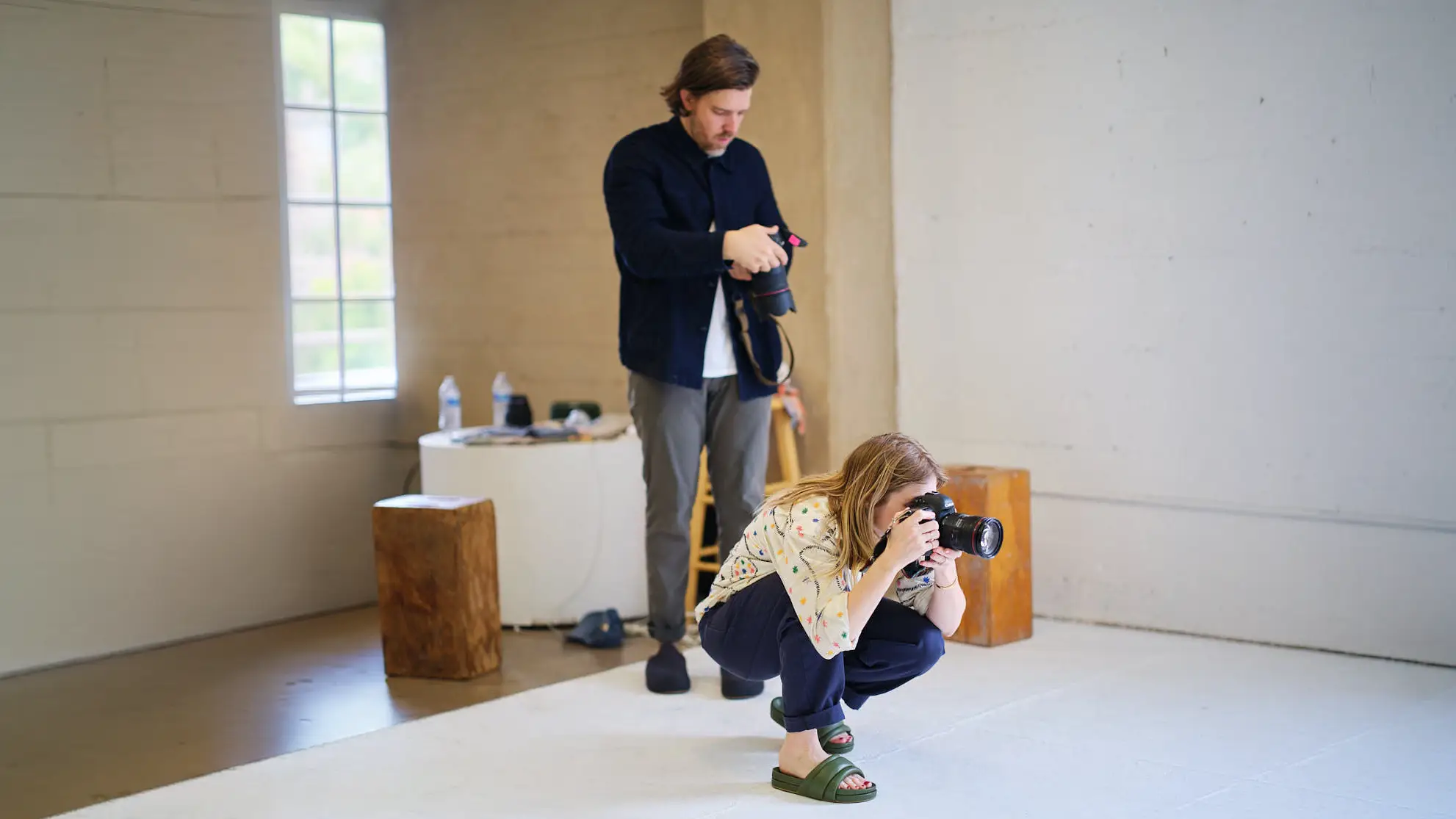
Their work placed them in environments that made the problem unavoidable. As Chris described it, they were often on set for long production days, constantly moving, directing talent, and shooting, which meant being on their feet for extended periods of time. Over time, that physical reality began to expose a deeper issue with the category itself. Sarah felt it directly. “I was struggling to find something that had the style I wanted but also provided real orthopedic support,” she explained. “If I chose something orthopedic, it came with a certain look. If I chose something more design-forward, it had no arch support, and I would end the day with a really sore back.”

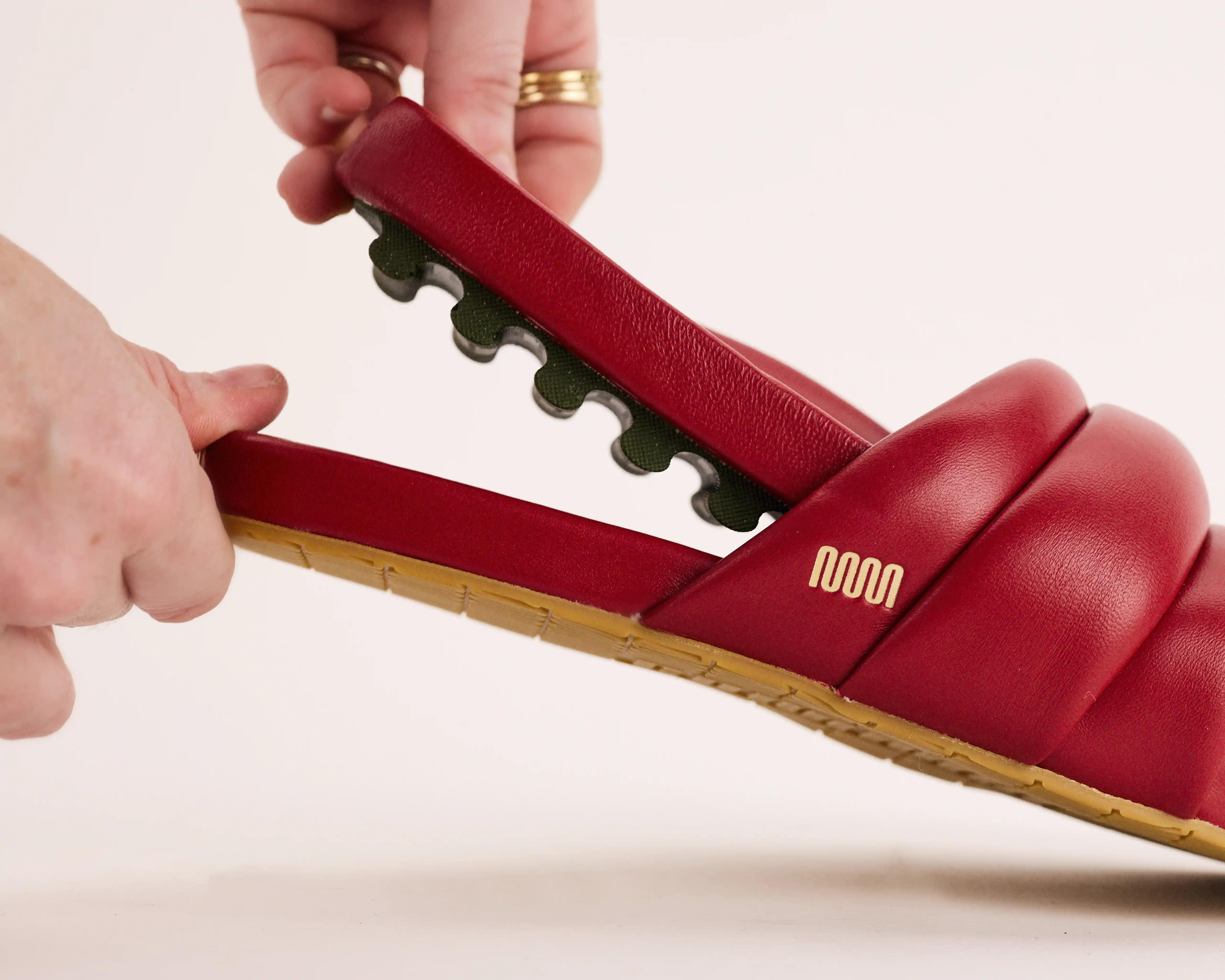
The workaround was not much better. They tried inserting insoles into more design-forward shoes, but that only created a different kind of problem. “If you put an insole into something like a flat slide or sandal, it doesn’t integrate with the shoe,” Chris said. “It ends up feeling and looking like something that doesn’t belong, rather than being part of the design.” That detail matters because it highlights something most brands overlook. The issue was not comfort or aesthetics in isolation. It was that the product itself was never designed to deliver both at the same time. That realization became the starting point for Commbi. Instead of asking how to improve what already existed, they began asking what it would look like to remove the tradeoff entirely.
Leverage Your Skillset and Stay a Student of the Process
Commbi was not built by footwear insiders. It was built by two creatives who understood how to think visually, solve problems, and iterate quickly. Rather than viewing their lack of experience as a limitation, they leaned into the skillsets they already had. As they described it, the process began by giving themselves permission to explore. “We started by letting ourselves be curious,” they explained. “We asked, if we were going to create a shoe, what would we actually want it to be?”
That curiosity quickly turned into execution. They began sketching concepts by hand, then pushed into more technical territory. “From there, I taught myself AutoCAD, and we started working with a 3D printer to bring ideas into physical form,” Chris said. “We would take something from a sketch and ask, can this actually work?” That question drove the entire process. They were not just designing for aesthetics. They were testing whether their ideas could function in reality.
At the core of this phase was a mindset rooted in continuous learning. “We really believe that there’s nothing you can’t figure out if you’re willing to learn it,” Sarah said. She described being able to see the product clearly before it existed, while Chris focused on solving the technical challenges to make it real. Together, they approached the process with what they called a beginner’s mindset. “We try to stay in a place where we’re always learning and always open,” they said. “There’s always something we don’t know yet, and that’s part of the process.” That approach allowed them to move forward without waiting for expertise, turning learning itself into a competitive advantage.
Obsess Over Product to Build a Defensible Advantage
Turning an idea into a product that can be manufactured at scale required a completely different level of focus. Early on, the challenge was not refinement but feasibility. They had to determine whether the product they envisioned could actually be built. “At the beginning, the question was simply, can we make this work at all?” they said. “No one had really done this before, so we were figuring it out as we went.”

That process required them to go deep into areas they had never worked in before. They studied materials, sourcing, and manufacturing constraints, often through direct experience. “We spent a lot of time learning about different materials and what was actually possible,” Sarah explained. “I traveled to different countries to find the right materials and partners, because quality and sourcing were really important to us.” At the same time, they were learning what would not work. “There were things we wanted to do that just weren’t possible with certain materials or processes,” she said, highlighting how much of product development is about navigating limitations.
Their attention to detail extended beyond the core product. “Even something like packaging mattered to us,” Sarah said. “Our first box didn’t meet the standard we wanted, so we went back and fixed it.” At the same time, they had to navigate the realities of manufacturing at scale. “In footwear, each size requires its own tooling,” Chris explained. “That adds a lot of complexity and cost upfront.” However, he also recognized the upside. “That complexity becomes a barrier to entry,” he said. “It makes it harder for someone else to replicate what you’ve built.” What initially felt like friction ultimately became part of the product’s defensibility.
Build Systems That Evolve as You Scale
As Commbi began to grow, the challenges shifted from product development to operations. Scaling introduced a constant stream of new variables, from logistics to customer experience. They described this phase as being in a continuous state of adjustment. “We’re dealing with new problems all the time,” they said. “Things that worked before don’t always work at the next stage.”

Their approach to systems evolved as a result. “At first, we thought of systems as something fixed,” Chris explained. “You build it once, and that’s how it works. But as we’ve grown, we’ve realized that systems need to change as the business changes.” Instead of trying to build perfect processes upfront, they focused on building systems that could adapt. “If something is working well enough, we move forward with it and improve it over time,” he said.
They also recognized the importance of bringing in expertise where needed. “There are areas where we’re not experts, and we’re honest about that,” Sarah said. “So we bring in people who are.” This included advisors across supply chain, product development, and operations. “Having people who have done this before gives you a completely different perspective,” she explained. That combination of flexibility and external insight allowed them to navigate growth more effectively, without trying to solve every problem alone.
Understand the Difference Between Brand and Performance
Commbi entered the market with a strong creative foundation. The founders had spent years producing high-quality content for global brands, which allowed them to launch with a clear visual identity. However, performance marketing quickly revealed a different reality. “We came in thinking we knew how to create great content,” they said. “But performance taught us something different.”
They found that high-production content did not always translate into strong results in digital channels. “We would test a really polished piece of content against something much more simple,” Chris explained, “and the simpler version would often outperform it, especially with a cold audience.” In many cases, user-generated content performed significantly better. “The more natural, less produced content just connected more,” they said.
That shift forced them to rethink their approach to creative. “People don’t want to feel like they’re being marketed to,” Chris said. “They want something that feels real.” At the same time, they recognized that high-quality creative still plays an important role in building the brand. The key was understanding how to use both. Instead of choosing one approach, they built a system that uses each type of content where it performs best, aligning creative with context rather than applying a single strategy across all channels.
Own Your Early Channel to Accelerate Learning
From the beginning, Commbi made a deliberate decision to focus on direct-to-consumer. This was less about control for its own sake and more about creating a tight feedback loop. “We wanted to understand our customer as clearly as possible,” they said. “And the best way to do that was to go direct.”

That decision allowed them to gather insights quickly and apply them directly to the product and messaging. “We were constantly asking, do people want this, and how can we make it better?” Sarah explained. “Being close to the customer made it easier to iterate.” That proximity to feedback became one of their biggest advantages in the early stages of the business.
As the company has grown, they have started preparing for expansion into new channels. “We’re planning to move into wholesale,” they said, “but we wanted to get the product and the brand right first.” That foundation has given them confidence in how they approach growth. Chris described their ambition clearly. “We’re not trying to build something small,” he said. “We want to take market share from the biggest players in the category.” The long-term vision is to build a product that becomes part of everyday life at scale, without losing the core idea that started it.