






From Personal Problem to Category Insight
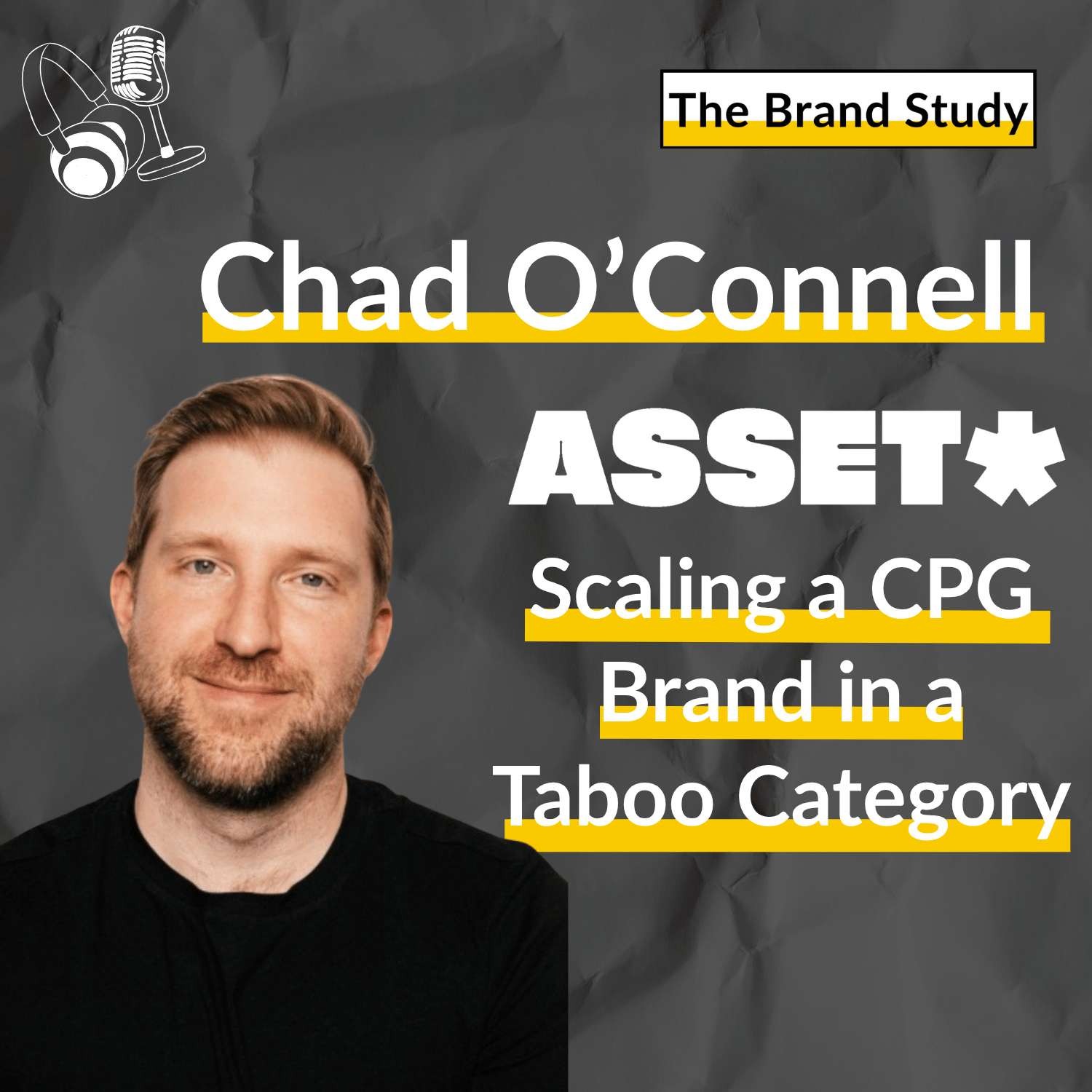
Asset did not begin as a market analysis exercise or a product brainstorm in a conference room. It started with a personal health issue that most people experience at some point but rarely discuss openly. Chad O’Connell had dealt with irritation and sensitivity in the perianal area for most of his life. As a child he struggled with digestive issues that required medication, and those early challenges carried into adulthood in the form of recurring hemorrhoids and fissures. Like many consumers facing similar problems, he cycled through available products only to find that they temporarily relieved symptoms without improving the long term health of the skin.
Over time that frustration turned into curiosity. If this problem was common, why was there no brand dedicated to solving it? Chad eventually began articulating the core insight behind Asset in simple terms. “About half the population experiences discomfort and sensitivities back there, even though we don’t talk about it.” The absence of open conversation had created an invisible category. Existing products lived in fragmented spaces such as wipes, hemorrhoid creams, or repurposed body skincare. No brand approached the category the same way skincare companies approached facial care or body care.
Before launching Asset, Chad spent years working in advertising where he built campaigns for major companies and developed a deep understanding of brand building. That experience sharpened his ability to see how narrative, identity, and product positioning shape consumer perception. Eventually he reached a point where the idea of building something of his own became impossible to ignore. As he puts it, he realized he loved branding and storytelling but was “working so hard for other people’s products and services.” The realization led to a decisive moment. He left his role at Ogilvy, liquidated his retirement savings, and committed himself fully to entrepreneurship.
The first step into the category came through a company called Whisper Bidet. That product addressed part of the irritation problem by reducing friction from dry wiping, but it also revealed a larger opportunity. As Chad began imagining what a full ecosystem of butt care products might look like, he landed on a single word that captured the idea perfectly. “I landed on the word Asset and I was like, man, this is the brand.” In that moment the vision expanded from a functional hygiene product into a brand focused on the health, hygiene, and aesthetics of the butt. Whisper Bidet became a stepping stone. Asset became the real company.
Proving the Market Exists
Launching a brand in a taboo category creates a unique challenge. Consumers might experience the problem frequently, but the absence of open discussion makes demand difficult to measure. Chad needed proof that his personal experience reflected a broader consumer need. To test that assumption he conducted a survey asking hundreds of people whether they had ever experienced issues related to irritation, hygiene, or discomfort in the area.
The results were dramatic. Ninety three percent of respondents reported experiencing some form of butt related issue at some point in their lives. The problems ranged from hemorrhoids and fissures to itching, irritation from grooming, hygiene challenges, and aesthetic concerns. For Chad the survey confirmed what he had suspected all along. “A lot of people do have problems and a lot of people don’t talk about those problems.” The silence surrounding the category had created the illusion that demand did not exist.
The survey also revealed a behavioral insight that shaped the brand’s early marketing strategy. One of the final questions asked respondents whether they had ever actually looked at their own butthole. The responses split almost perfectly in half. “Fifty percent of people have seen their butthole and fifty percent of people have never looked at their butthole.” More importantly, the people who had inspected their bodies were far more receptive to the brand concept. Chad later joked that his marketing goal became figuring out “how do I build a gravity where anyone who’s ever looked at their butthole knows to find us.”
That insight pointed toward the company’s first target audience. Instead of attempting to educate the entire population about butt care, Asset focused on people who were already problem aware. Chad explains the reasoning with a founder’s pragmatism. “Education is important, but it’s also very expensive.” A small startup does not have the budget to convince millions of people that a new category exists. Instead, the company focused on consumers who already understood the problem and were actively looking for solutions.
By starting with the most motivated audience, Asset could build traction without needing to transform the entire cultural conversation immediately. Once the brand established credibility among problem aware consumers, it could gradually expand its messaging to reach broader audiences.
Building a Product That Actually Works
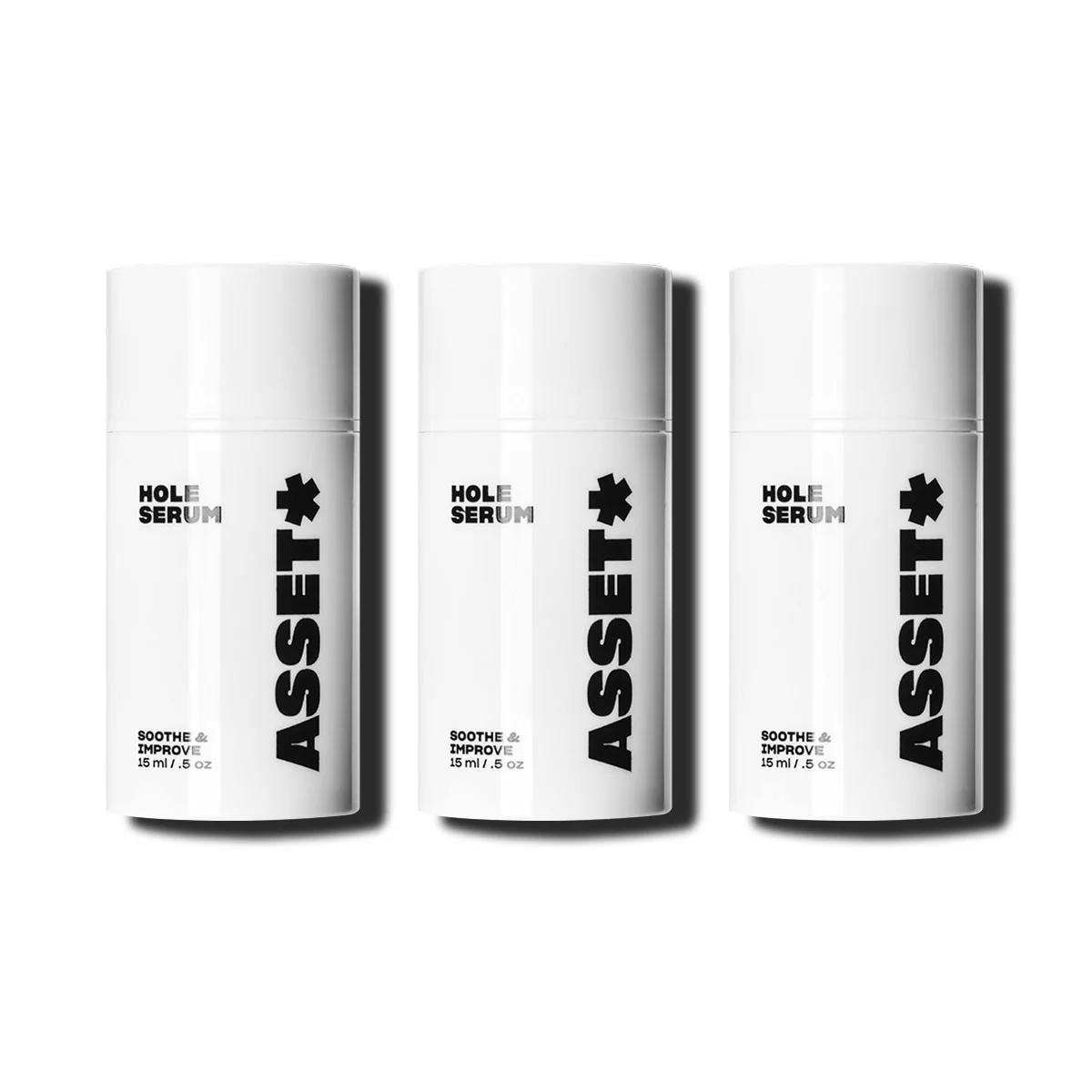
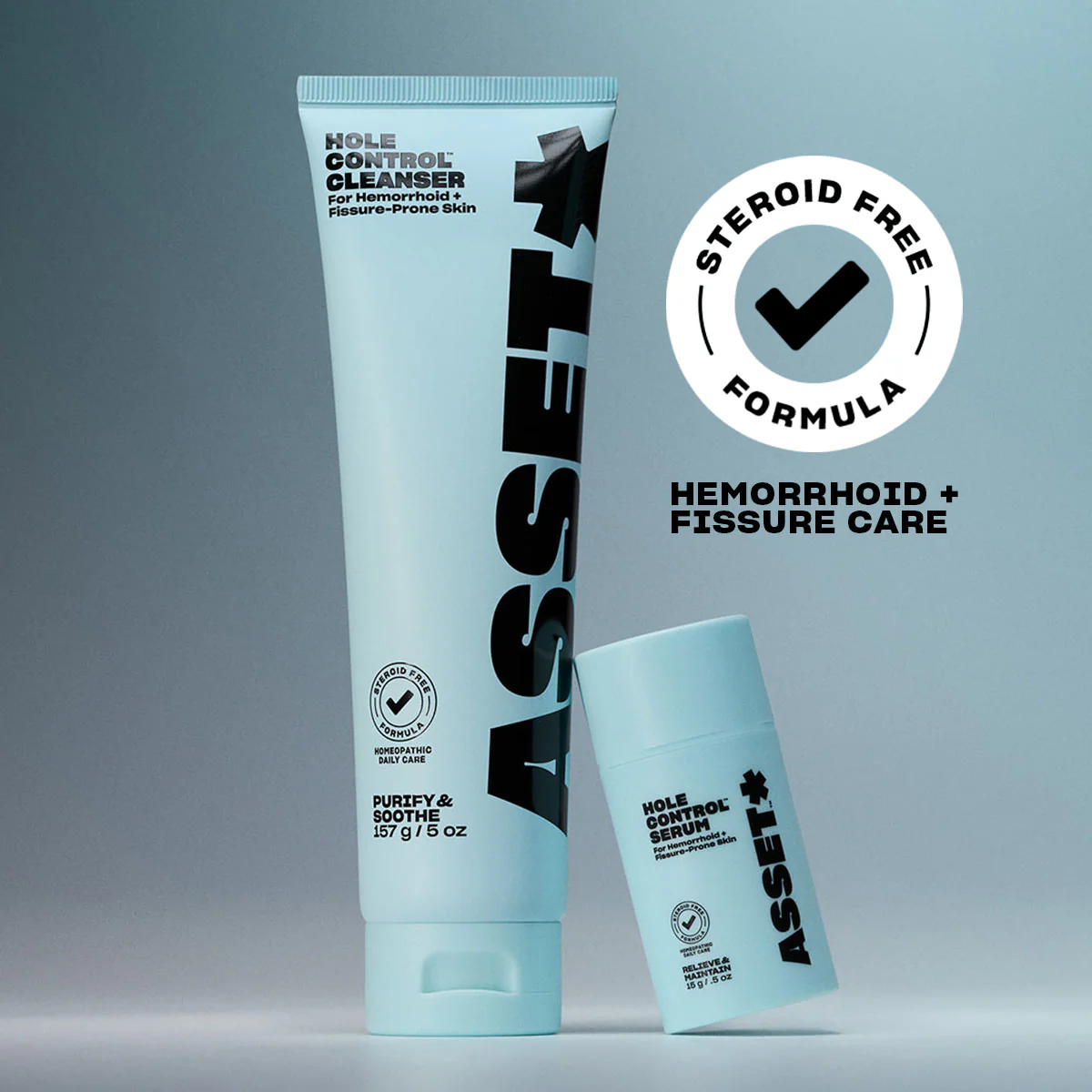
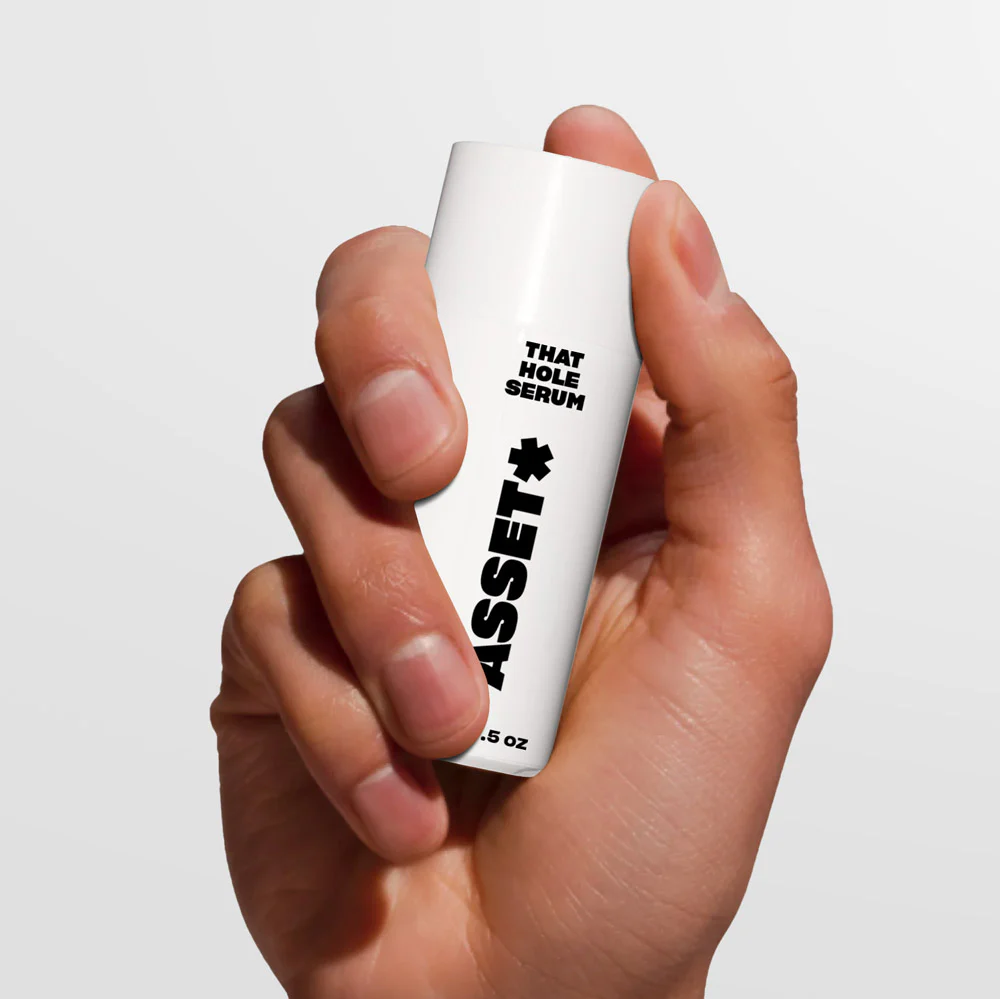
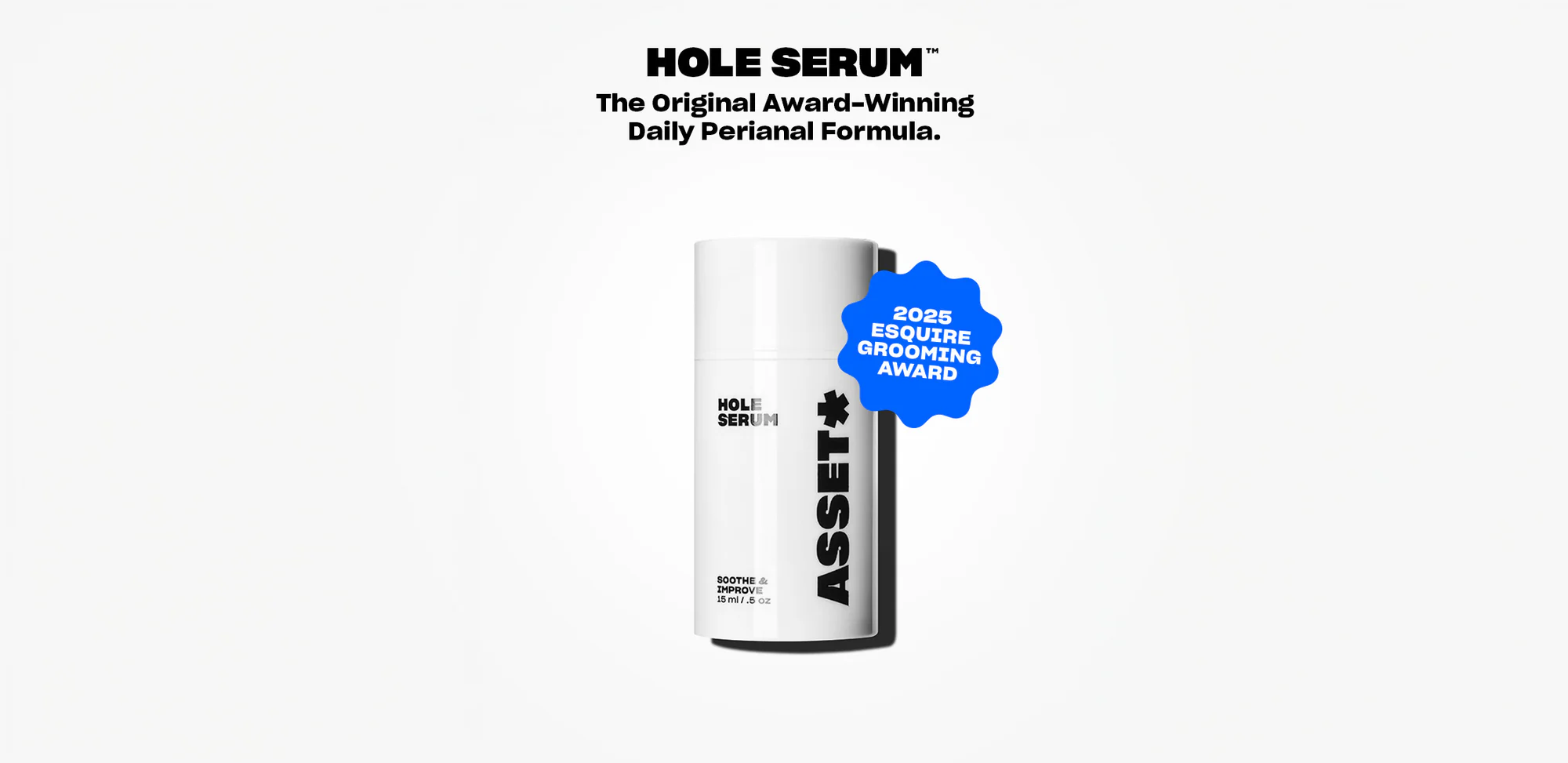
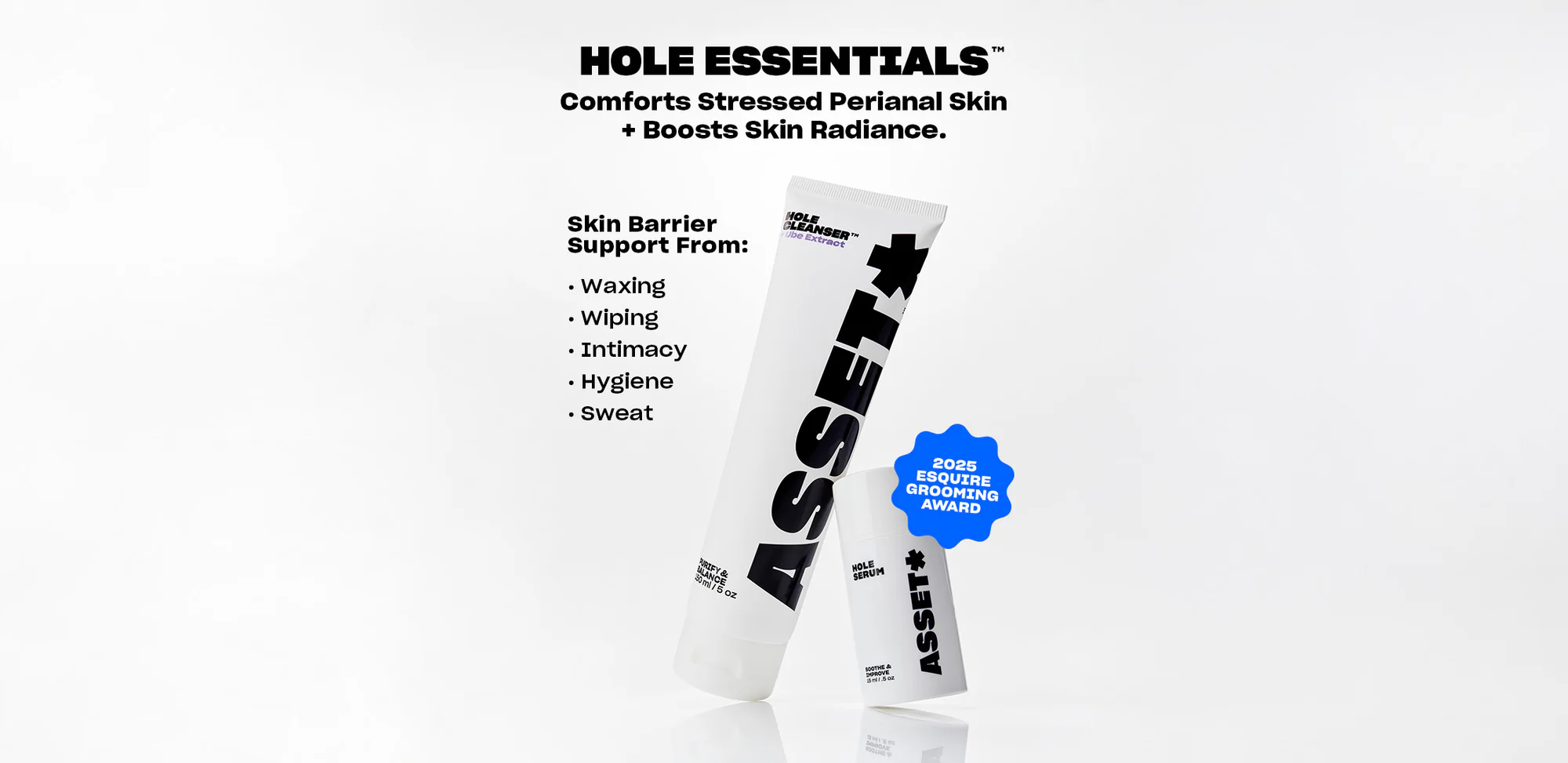
While the brand story and category insight were powerful, the majority of Asset’s early timeline was consumed by product development. Chad spent more than two years working on the formulation of Hole Serum, the company’s first product. Creating a skincare formula specifically for the perianal area introduced technical challenges that traditional cosmetic laboratories were not prepared to solve. Most skincare products rely on airflow and evaporation to disperse across the skin. The perianal environment is fundamentally different. Chad describes the problem in practical terms. “There’s no airflow between your cheeks.” Without airflow, many traditional ingredients behave differently, and formulas that work well on the face or body can cause irritation in this part of the body. Alcohol based ingredients, for example, are commonly used to help products evaporate and spread evenly, but in this case they would be extremely irritating.
Solving that challenge required extensive experimentation and research. Chad describes becoming an armchair chemist while studying the biology of the skin and the way irritation develops. Over time he worked with multiple laboratories attempting to develop the formula. The process was slow and frustrating because most cosmetic manufacturers relied on existing base formulas that could be lightly customized. Asset required something fundamentally different. Eventually the breakthrough came when Chad began working directly with an independent chemist who operated his own lab. Instead of navigating layers of account managers and project managers, the two collaborated directly. The dynamic resembled the creative partnerships Chad had experienced in advertising. “I’m a creative at heart. I’m used to talking to designers and photographers and having a back and forth.” That kind of collaboration had been missing when working with large labs.
The direct relationship changed everything. Instead of waiting weeks for updates, the two exchanged prototypes and feedback rapidly. “It took me over eighty iterations and four different chemists before I found someone who could land the formula with me.” Chad served as the first test subject throughout the process because his sensitivity made it easy to detect whether the product was working. Eventually the formula reached a stage where it could be tested with dozens of additional users. The obsessive focus on formulation came from a simple belief about consumer brands. As Chad puts it, “Good advertising makes a bad product fail faster.” If the product did not actually solve the problem, scaling marketing would only accelerate the brand’s collapse.
Launch Strategy and Customer Acquisition Economics
By the time Asset approached launch, most of the company’s resources had already been spent on research and development. Instead of waiting for the perfect marketing campaign, Chad decided to launch with the assets already available. The strategy was simple. Turn on Meta ads and see what happens. But that simplicity masked months of preparation. Before the product even existed, Chad had already tested demand using a clever validation strategy suggested by another founder. He built the website and ran real advertisements while disabling the credit card authorization step during checkout. Visitors could browse the product page, add the item to their cart, and enter payment details, but the transaction would never complete.
The goal was not revenue but behavioral data. Chad wanted to see whether real consumers would move through the entire purchase funnel. He explains the logic clearly. “It’s one thing to click on the ad, but will someone actually convert on this product and this message.” By analyzing how visitors behaved at each stage of the funnel, he could identify potential problems with messaging, pricing, or product positioning before manufacturing the product. The test produced real metrics including click through rate, conversion behavior, and estimated acquisition costs. By the time the product launched, the company already knew that people were willing to buy it. When the ads finally went live with real inventory, the results followed a familiar startup trajectory. The first few days produced little activity, but orders began to appear soon afterward. Two orders, then four, then eight. Within about a week the brand was receiving roughly fifty orders per day.

As the company grew, another reality quickly emerged. Customer acquisition would be the most expensive part of the business. Chad emphasizes that many founders underestimate this aspect of building a consumer brand. “Most founders fail because they can’t figure out how to acquire a customer.” Manufacturing the product is only one piece of the puzzle. Introducing that product to the market requires sustained marketing investment. To manage the economics properly, founders must calculate the fully loaded cost of goods. Chad explains that the true cost includes far more than ingredients and packaging. “You need to factor in freight, trucking, credit card transaction fees, and all the little costs that stack up.” Only after those costs are accounted for can a founder determine how much marketing spend remains available to acquire customers profitably. At Asset roughly half of the company’s financial outflow goes toward customer acquisition. That reality reinforces why product performance and retention are so important. If customers do not come back, the acquisition economics collapse.
Scaling a Taboo Brand in the Modern Marketing Landscape
Building a brand in a taboo category creates both advantages and obstacles. The same tension that attracts attention also creates friction with advertising platforms and content moderation systems. Early in the brand’s development Chad organized a photo shoot that captured the visual identity of Asset through images of confident people living everyday life without embarrassment about their bodies. The photos were artistic and non sexual, but many of them were rejected by advertising platforms.
The issue was not the imagery itself but the automated moderation systems used by social media companies. Chad discovered that even a small glimpse of a butt crack could trigger algorithmic flags. In some cases even statues or artwork were flagged as inappropriate content. “Meta does not like butt cracks,” he explains bluntly. The algorithms were designed to detect nudity but lacked the nuance to distinguish between explicit content and intimate wellness products. Instead of abandoning the brand’s identity, Chad reframed the challenge as a creative constraint. In advertising he had learned that limitations often produce better ideas. When a straightforward solution becomes impossible, teams are forced to invent more creative approaches. He describes the mindset clearly. “Whenever you’re put into a constraint, you’re forced to come up with a new way at it, and often you come up with an even better idea.”

Humor also became an important part of the brand’s voice. From the beginning the team anchored the brand identity around three core principles, one of which was wit. Chad chose the word intentionally because the brand needed humor to disarm the taboo without becoming crude or juvenile. “We’re talking about butts, so you have to embrace the humor of it.” At the same time the brand had to maintain credibility because the product addressed real health concerns for many consumers. As Asset continues to grow, Chad sees the brand as part of a broader cultural shift toward openness in personal wellness. Fifteen years ago topics such as bidets, intimate care, or grooming were rarely discussed publicly. Today many of those categories are widely accepted. Chad believes butt care represents the final frontier in that evolution. His vision for Asset is to become the expert brand in that category, building products that help people feel more comfortable, confident, and healthy in their bodies.
For Chad the lesson is ultimately simple. Great ideas are common. Execution is rare. Turning a taboo problem into a trusted consumer brand requires persistence, creativity, and the willingness to keep solving problems long after the initial idea feels obvious.


